Peptide synthesis has evolved from a complex, low-yield laboratory procedure into a sophisticated manufacturing discipline capable of producing research-grade, cosmetic-grade, and formulation-ready peptides with exceptional purity and structural precision. Modern research—ranging from molecular biology and regenerative science to dermatological innovation—relies heavily on the accuracy of peptide construction. The method used to synthesize a peptide directly influences its purity, stability, cost-efficiency, and suitability for downstream applications.
Today’s primary synthesis models include Solid-Phase Peptide Synthesis (SPPS), Liquid-Phase Peptide Synthesis (LPPS), and emerging hybrid techniques that combine the strengths of both. High-level suppliers such as Direct Peptides source from facilities that utilize these technologies strategically, ensuring that the synthesis approach aligns with each peptide’s complexity and functional demands.
This article explores each synthesis method in depth, comparing their mechanisms, advantages, limitations, and the role they play in modern research environments.
Why Synthesis Method Matters in Research Outcomes

1. Structural Precision Depends on the Manufacturing Model
Different synthesis techniques affect:
- sequence fidelity
- coupling efficiency
- racemization risks
- byproduct formation
- purification requirements
- scalability
The synthesis method essentially dictates how “clean” and structurally accurate the final peptide will be.
2. Complex Peptides Require Tailored Approaches
Not all peptides behave the same during synthesis.
Examples of difficult sequences:
- hydrophobic clusters
- long-chain peptides (>50 amino acids)
- disulfide-linked peptides
- branched or atypically structured peptides
- copper-binding peptides such as AHK-Cu or GHK-Cu
Matching the right synthesis model with the peptide structure ensures higher yields and fewer impurities.
3. Efficiency Impacts Cost & Accessibility
Advanced SPPS automation has reduced production costs dramatically, enabling suppliers like Direct Peptides to maintain competitive pricing without compromising analytical quality.
Solid-Phase Peptide Synthesis (SPPS)
SPPS is the dominant technique in modern peptide manufacturing due to its efficiency, reliability, and scalability.
How SPPS Works
1. Peptide Built on a Solid Resin
The peptide chain grows attached to a polymer resin bead.
Advantages:
- simple washing steps
- high automation compatibility
- rapid coupling–deprotection cycles
2. Stepwise Addition of Amino Acids
Each new amino acid is:
- activated
- coupled
- washed
- deprotected
This cycle repeats until the full sequence is formed.
3. Final Cleavage & Deprotection
The peptide is cleaved from the resin and all protecting groups removed.
Why SPPS Is the Global Standard
-
High Coupling Efficiency
Modern reagents produce consistent coupling with minimal errors. -
Ideal for Medium to Long Peptides
Works well for 3–70 amino acid sequences. -
Fast & Automated
Robotic synthesizers reduce human error. -
Broad Chemical Compatibility
SPPS supports modified, labeled, or atypical residues. -
Clean Purification
Impurity profiles are predictable and easy to separate.
Limitations of SPPS
- higher resin cost
- hydrophobic sequences may aggregate
- less suitable for multi-kilogram production
Liquid-Phase Peptide Synthesis (LPPS)
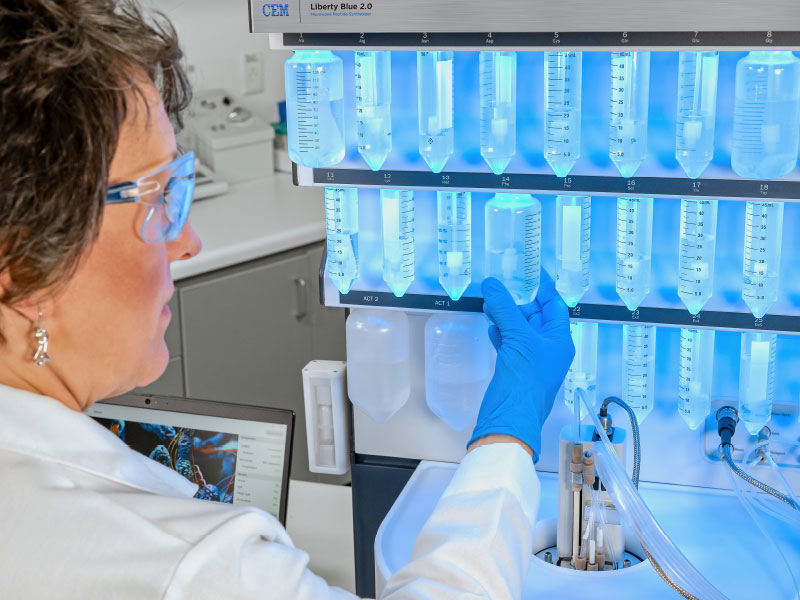
LPPS remains valuable for specific applications despite the dominance of SPPS.
How LPPS Works
The peptide grows freely in solution rather than on a resin.
Advantages of LPPS
-
Ideal for Short Peptides
Great for dipeptides, tripeptides, and short building blocks. -
Better Reaction Control
Chemists can adjust solvent, pH, or temperature precisely. -
Scalable for Industrial Quantities
Preferred for large-scale, kilogram-level production. -
High Yield for Simple Sequences
Low-cost and efficient for short chains.
Limitations of LPPS
- labor-intensive
- slower reaction cycles
- complex purification
- not ideal for medium/long peptides
- limited automation
Hybrid Synthesis Methods
Hybrid synthesis combines SPPS and LPPS for maximum efficiency and purity.
Why Hybrid Synthesis Is Used
-
Long Peptides with Difficult Regions
Chemists may produce fragments separately and combine them later. -
Reduces Aggregation
Prevents hydrophobic domains from folding prematurely. -
Improved Purity
Each fragment is purified individually. -
Supports Complex Modifications
Essential for peptides requiring PEGylation, lipidation, cyclization, or metal ion incorporation.
Choosing the Right Synthesis Method
SPPS Is Best For:
- medium-length peptides
- peptides requiring modifications
- fast turnaround
- high purity requirements
LPPS Is Best For:
- short peptides
- large-scale industrial production
- cost-sensitive cosmetic peptides
Hybrid Models Are Best For:
- long or highly hydrophobic peptides
- multi-fragment peptides
- medically oriented complex sequences
How Direct Peptides Ensures Quality Across Methods
Direct Peptides collaborates with synthesis partners specializing in:
- automated SPPS
- LPPS for industrial-grade segments
- hybrid fragment assembly
- high-purity chromatographic refinement
Each batch includes:
- HPLC chromatograms
- mass spectrometry verification
- solubility notes
- stability guidelines
- lot matching for reproducibility
This ensures researchers receive clean, structurally precise, analytically verified peptides regardless of the synthesis method used.
Conclusion
Peptide synthesis is the structural foundation of every research peptide used in modern science. Whether the goal is signaling studies, cosmetic innovation, regenerative models, or therapeutic exploration, the synthesis approach directly determines the reliability of the material.
SPPS remains the backbone of modern peptide production, LPPS provides scale and cost efficiency for short sequences, and hybrid models bridge the gap for complex or high-value peptides. By understanding these technologies—and sourcing from reliable partners like Direct Peptides—researchers ensure that every peptide is built on precision, purity, and scientific reproducibility.
Read More
Why Purity Matters in Research Peptides: Methods, Testing & Quality Benchmarks
Advanced Peptide Stability: Storage Conditions, Degradation Pathways & Research Handling Protocols